Enterprise SaaS · PR CRM · 2019–2023
Muck Rack
Joined as the founding product designer when Muck Rack was a niche journalist directory. Over four years, evolved it into an enterprise PR platform serving global brands. Built the design function, the design system, and a team of six. $21M to $50M ARR, $180M Series A.
Role
Senior Product Designer
Years
2019–2023
Team built
1 → 6 designers
ARR growth
$21M → $50M
The context
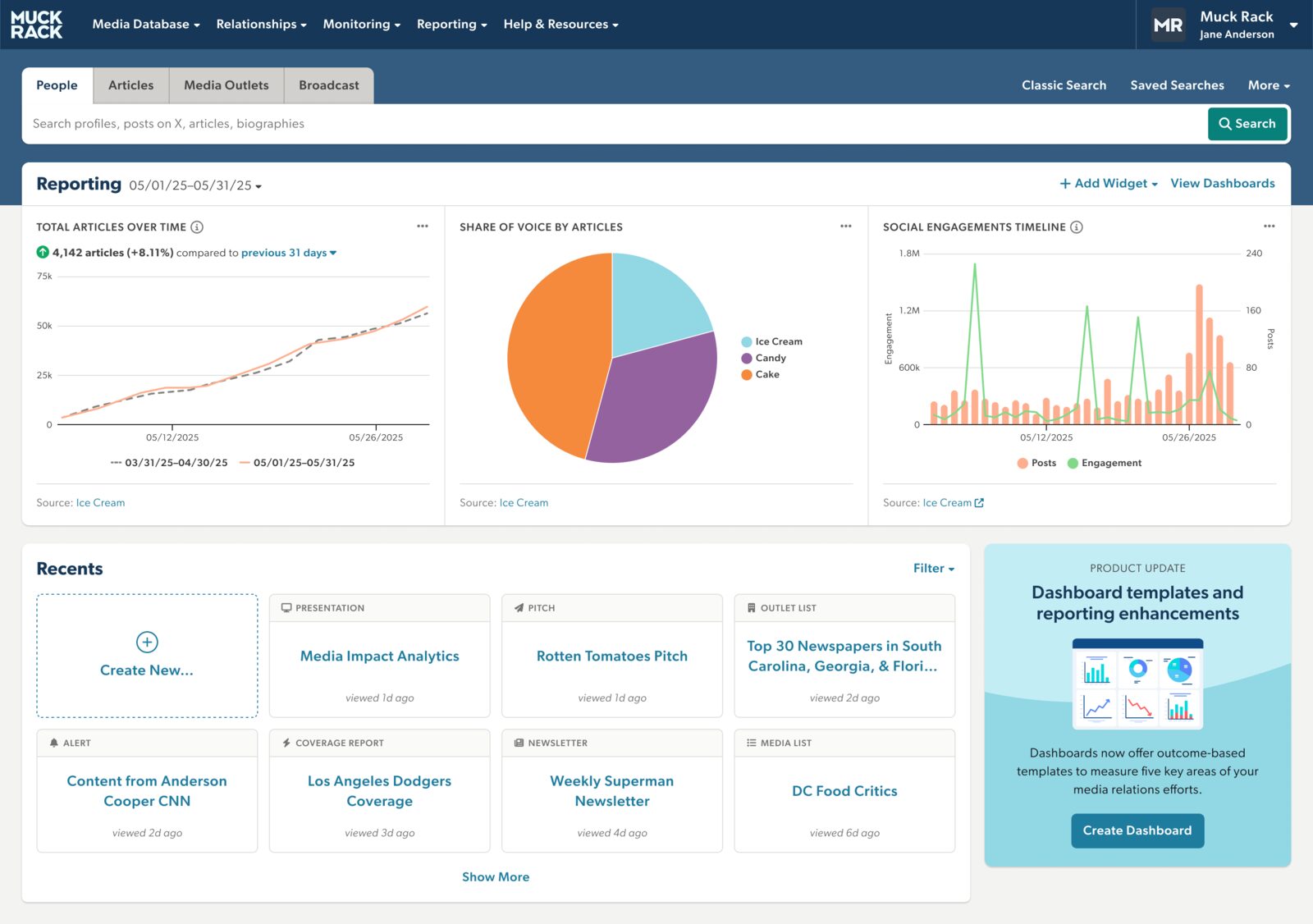
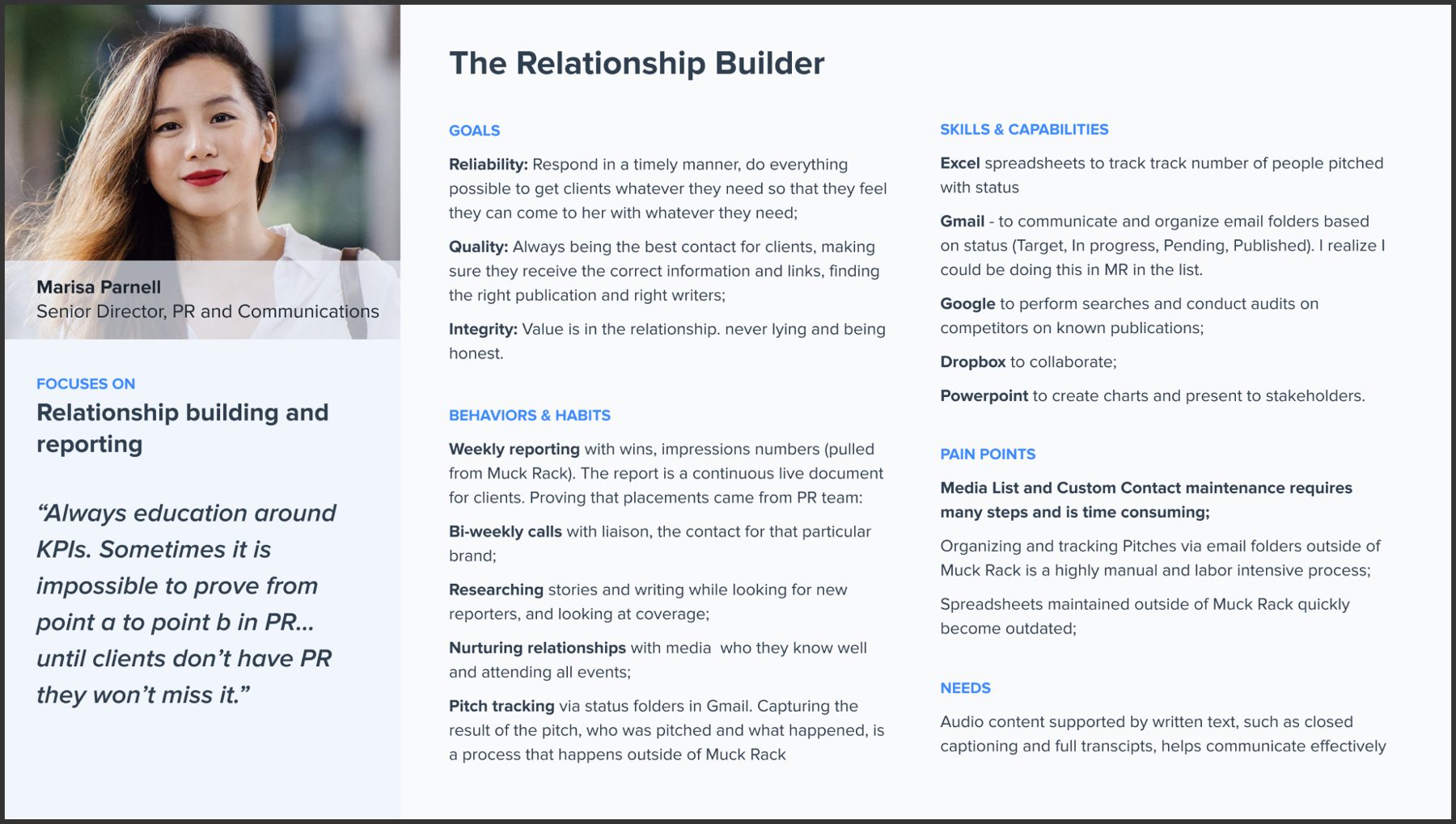
When I joined Muck Rack, the product had no design system, no consistent UX patterns, and no second designer. Communications teams couldn't quantify their PR results; 64% said so directly in customer surveys. 71% identified measuring impact as their biggest challenge. The product needed to grow up fast.
What I built
01
Established the design function from scratch: process, tooling, review cadence. Grew the team from 1 to 6.
02
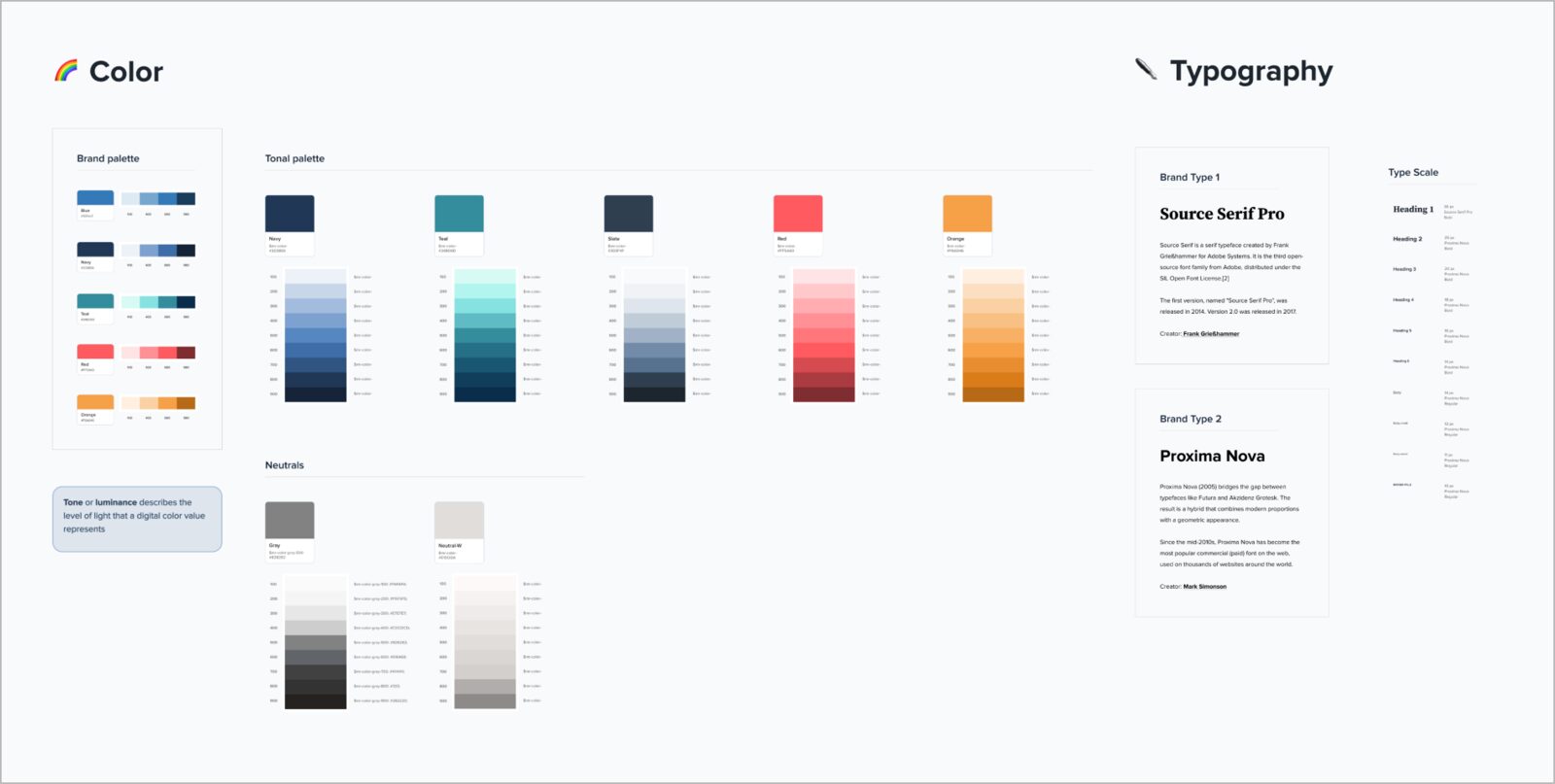
Built and launched Muck Rack's first design system, reducing inconsistency and accelerating delivery.
03
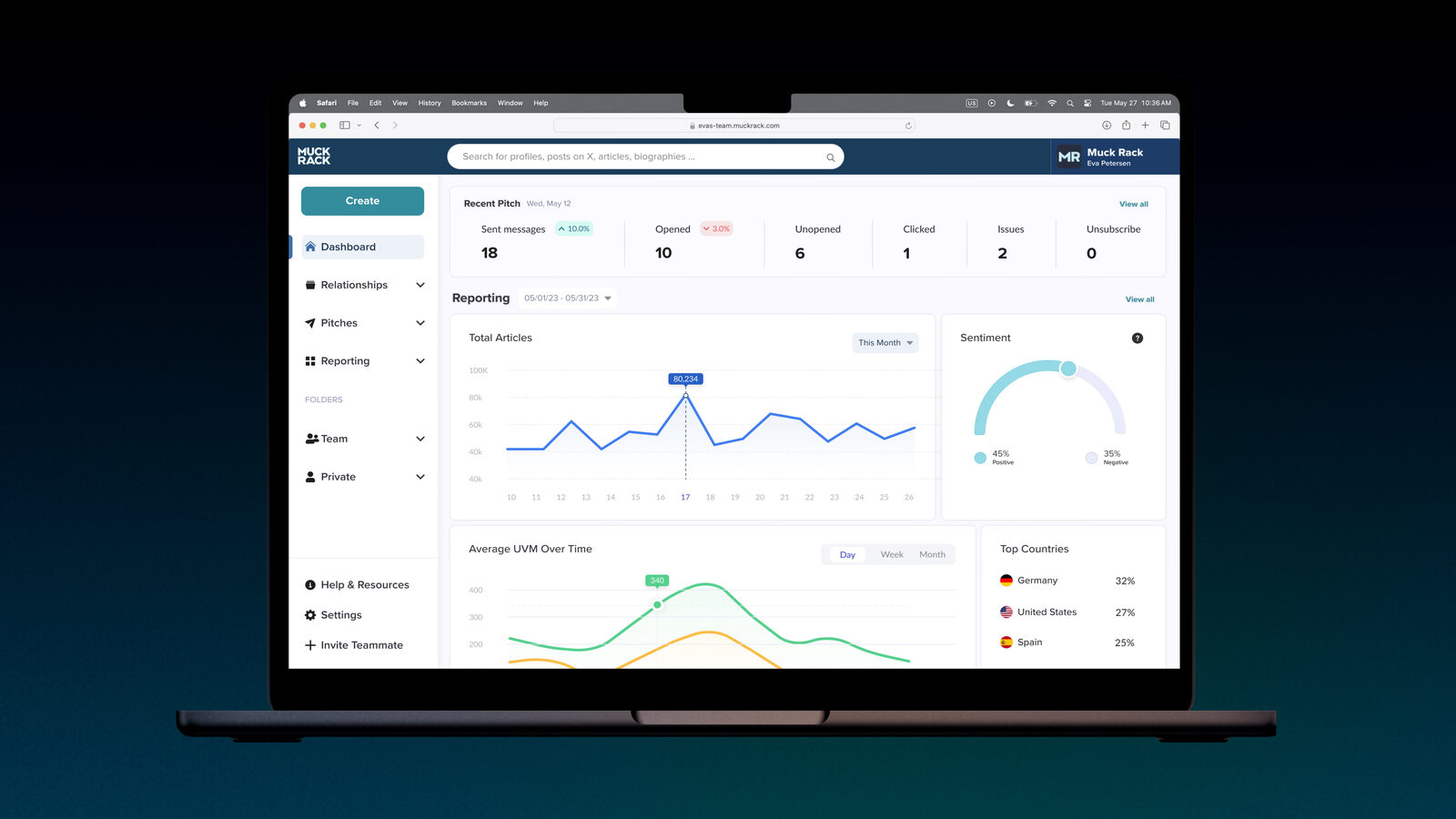
Designed the Dashboard: identified the opportunity in 2022, advocated for it for years, designed most of it. It shipped after I left.
04
Designed the Media List Uploader end to end.
05
Shipped AI monitoring and reporting features grounded in user research.
06
Partnered with leadership on roadmap, contributed to $180M Series A narrative.
Process
- 01Research. JTBD interviews and contextual inquiries to map where PR workflows actually broke down.
- 02Design. Low-fidelity flows tested with alpha users, iterated until the usability held up.
- 03Scale. Launched the first design system to enforce UI consistency and accelerate delivery.
- 04Collaborate. Worked daily with PM and engineering: prioritization, design reviews, dashboard demos to leadership.
Key work: Unified Dashboard
The dashboard was the product's most complex surface, where PR teams needed to understand the impact of their work in real time. I designed a customizable workspace with inline editing, real-time collaboration, and contextual data presentation that helped users decide what to do next rather than just showing them numbers. The inline editing borrowed spreadsheet familiarity on purpose: it eliminated the external spreadsheets teams were maintaining alongside the product and cut the constant tool-switching.
"Amazing job launching dashboards into beta with 100 customers! This sets the foundation for how we show the impact of PR efforts."
Greg Galant, CEO and Co-Founder
Key work: Intelligent Contact Discovery
Redesigned how PR teams find and manage journalist contacts. Contextual search API, AI suggestions, automated data enrichment, relational mapping between contacts and coverage. Reduced content parsing errors by 45%.
Key work: Media List Uploader
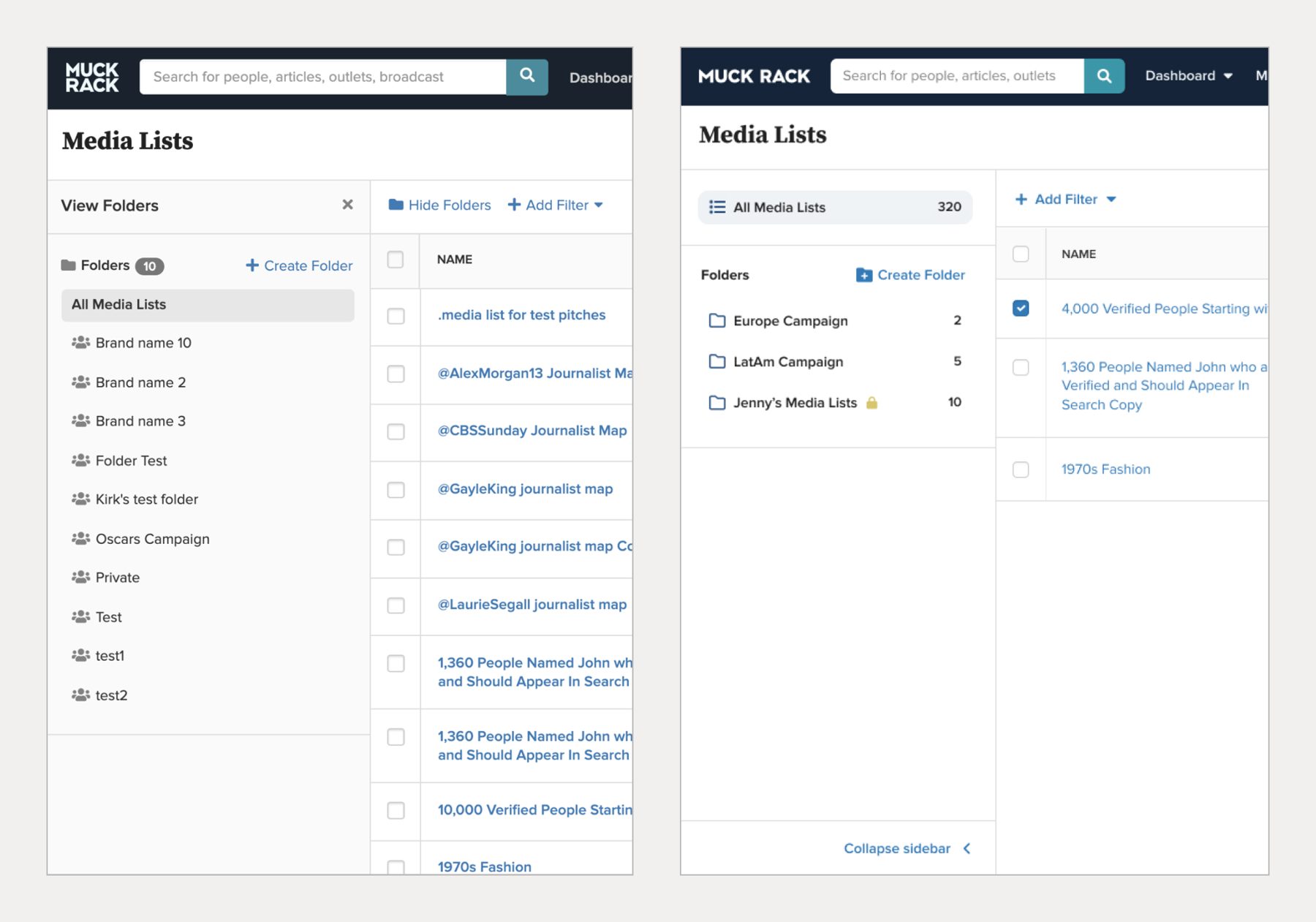
Before, importing a media list meant manual entry and waiting on support. I designed the uploader end to end, from file import through journalist matching against Muck Rack's database, turning a service bottleneck into a self-serve flow.
Hard decisions
Spreadsheet familiarity over a cleaner canvas
The obvious dashboard design was a polished, bespoke reporting surface. I chose inline, spreadsheet-style editing instead, even though it looked less elegant, because PR teams were already living in external spreadsheets alongside the product. Borrowing conventions they trusted eliminated the tool-switching and the shadow spreadsheets entirely. I traded visual novelty for adoption, and adoption was the point.
A design system before anyone asked for one
As the only designer, I could have kept shipping features and deferred the system. I built it early instead, absorbing a short-term slowdown to buy long-term velocity. That bet is what let the team grow from one designer to six without the product fragmenting underneath us.
Self-serve over the safe service desk
Importing a media list was a support-assisted process: reliable, but a bottleneck. The cautious move was to keep a human in the loop. I designed the Media List Uploader to match journalists against our database automatically, betting that getting the matching logic right was worth turning a service task into a self-serve flow. It was.
Impact
$21M → $50M
ARR growth
$180M
Series A secured
45%
reduction in parsing errors
15+ hrs/week
saved per user
Series A reported by TechCrunch, September 2022.
"Props to Eva for not only designing Dashboards over the last year but also introducing a new design process that's already leveling up how we ship."
Darya Roshikina, Product Manager
What I learned
Platform design at scale. Balancing user needs with technical constraints means holding two things at once: the immediate need and the system it belongs to. The design had to evolve with the business while staying coherent.
Data visualization for action. It was never just about displaying data; it was about helping users decide what to do next. I built deep muscle in contextual data presentation that drives behavior instead of overwhelming people.
Cross-functional leadership. As the first designer in a fast-growing startup, I influenced product direction through design while building real partnerships with engineering, sales, and customer success.
I also learned, the hard way, what founding design work really means. You're not just designing features; you're building the conditions under which good design can keep happening after you leave.