Travel · Mobile · 2017–2019
Marriott Vacations Worldwide
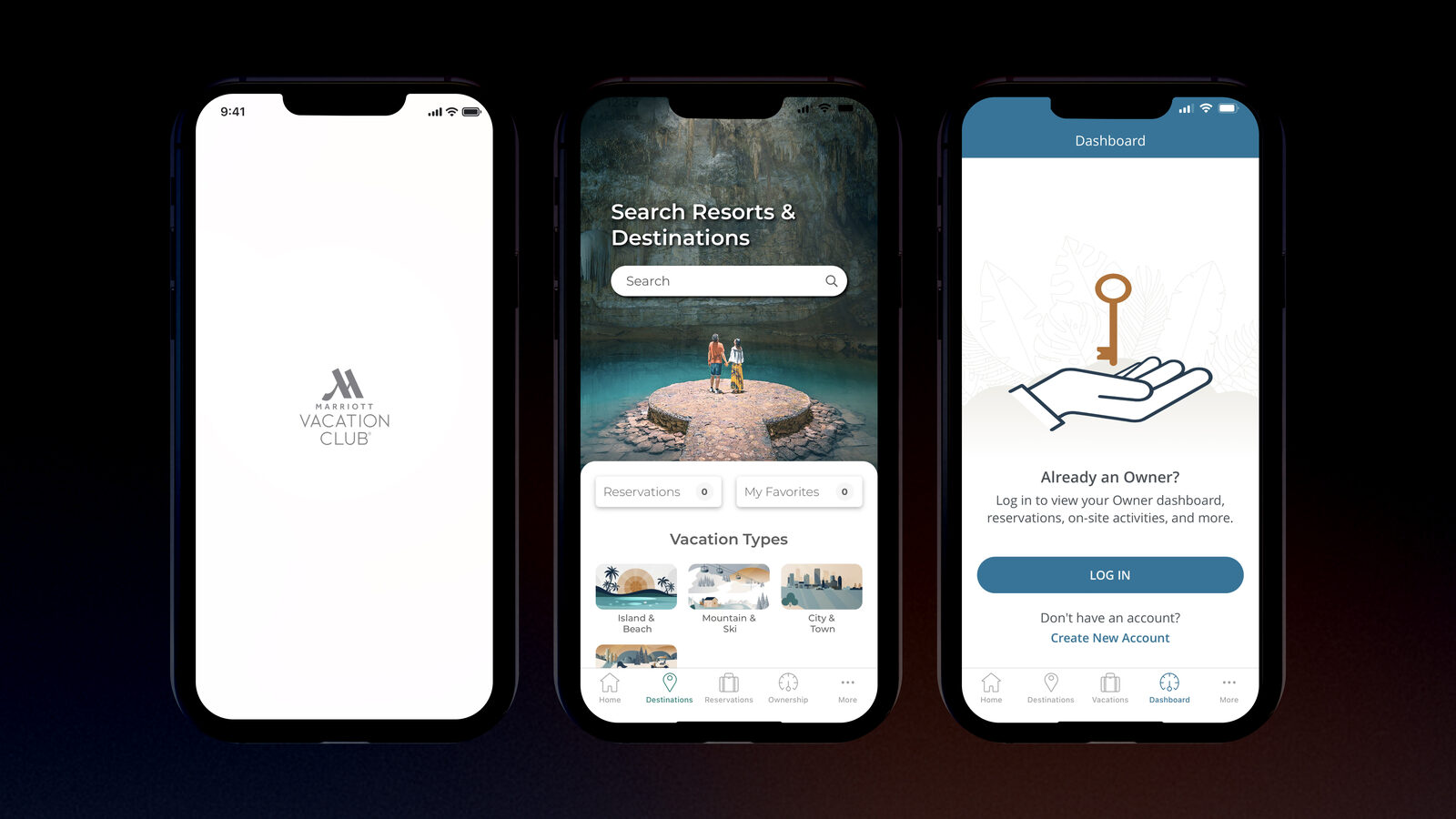
Information architect on a mobile-first redesign serving 20 million travelers. Redesigned core discovery and booking flows to work across device contexts without breaking the complexity of vacation ownership.
Role
Information Architect
Years
2017–2019
Scope
Mobile-first redesign
Scale
20M travelers
The challenge
Vacation ownership products are among the most complex in travel: points systems, property tiers, booking windows, owner vs. exchange flows, family configurations. Making that work on mobile, for 20 million people with varying levels of familiarity with the product, required IA work that could simplify without hiding the real complexity.
My role
I led the redesign of vacation discovery and booking flows across iOS and Android, working with brand managers, engineering teams, and stakeholders to create unified experiences that honored brand distinctions while simplifying user decision-making.
01
Led information architecture for discovery and booking flows in the mobile-first redesign.
02
Mapped user journeys across owner types, property categories, and booking contexts.
03
Developed navigation structures and content hierarchies that worked across device sizes.
Hard decisions
Simplify without hiding the complexity
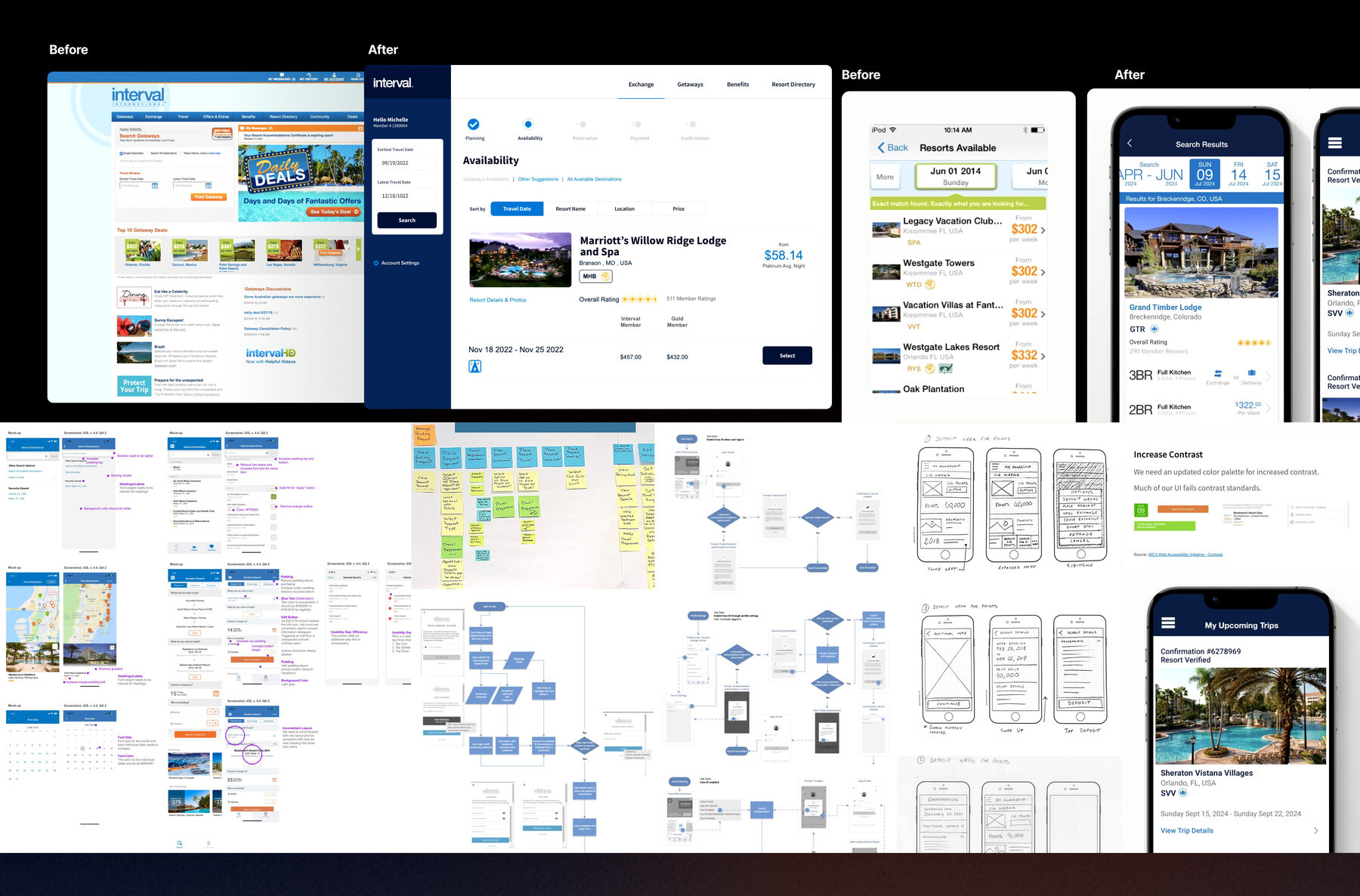
The fastest way to a clean mobile experience was to strip out the hard parts: points math, tiers, booking windows. I chose progressive disclosure instead. The complexity was real and owners depended on it, so the architecture had to make it approachable on a small screen rather than pretend it wasn’t there.
Accessibility as the default, against the room
Leadership worried that long-time club members couldn’t handle large UI changes and assumed accessibility would make the redesign harder. I pushed for WCAG 2.1 anyway and showed it was achievable, then showed it made the product more usable for everyone, not just the members it was meant to protect. The evidence changed the room.
Mobile as the platform spine, not a companion
Mobile could have been a cut-down version of the desktop site. I designed it as the architecture the rest of the platform would inherit, so the IA decisions I made on the smallest screen set the structure for desktop and brand partnerships that followed.
Impact
A unified multi-brand experience. The mobile app designs became the foundation for the desktop experience and the broader platform redesign, flexible enough to extend to brand partnerships.
A more accessible app. Leadership worried that long-time club members couldn't handle large UI changes, and assumed accessibility would make the redesign harder. I showed that WCAG 2.1 compliance was achievable, and that meeting it made the product more usable for everyone, not just the members it was meant to protect.
What I learned
Designing across brand systems. Building consistency without erasing what makes each brand its own.
Mobile-first scalability. A mobile experience can drive platform-wide consistency when the architecture is thought through from the start.
Accessibility as opportunity, not constraint. Observing WCAG guidelines unlocked broader usability gains without major trade-offs, and changed how leadership saw the redesign.