Healthtech · D2C + B2B · 2025–2026
eMed
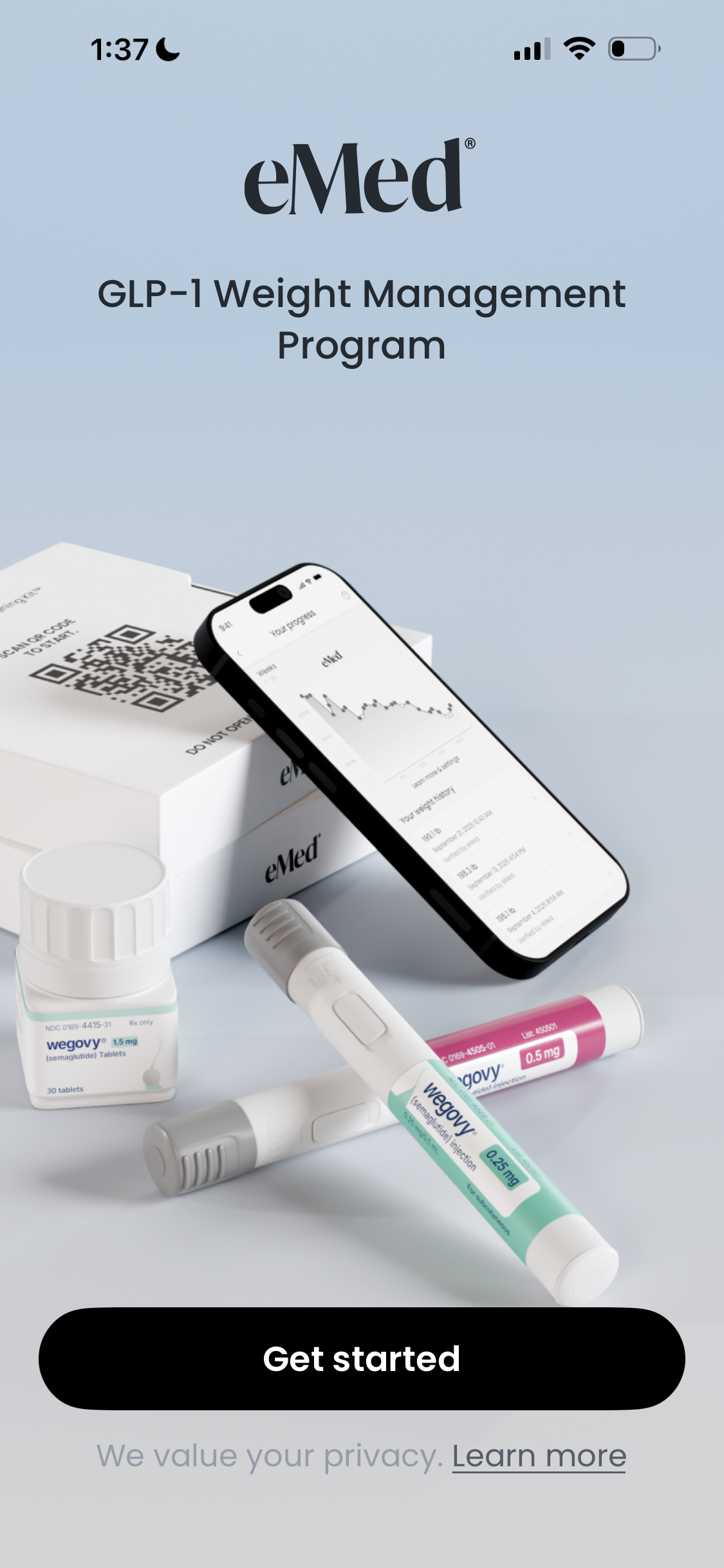
I led design for eMed’s GLP-1 weight management and women’s health programs across B2B and D2C, and the US launch of the eMed and SheMed brands. I designed an AI health companion, AI-assisted onboarding, hired two designers, and led design end to end through launch.
Role
Product Design Lead
Years
2025–2026
Scope
D2C + B2B
Team hired
2 designers
Context
eMed is a digital health company focused on accessible, evidence-based care. I joined to lead design at a critical moment: the US D2C launch of its GLP-1 weight loss and preventive care programs.
The work covered clinical handoff flows, regulatory-compliant member journeys, and brand design, simultaneously, against a hard launch deadline.
Before
After
What I did
01
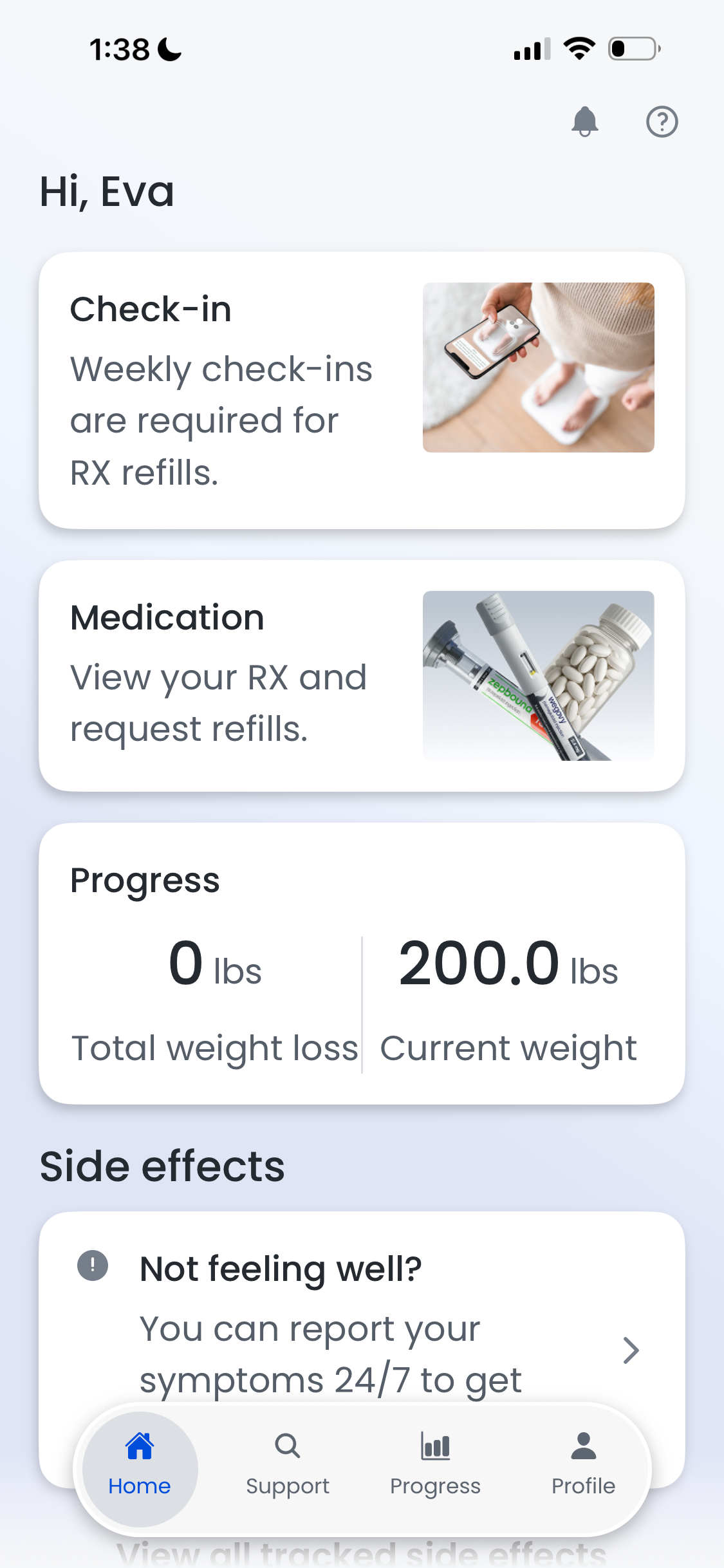
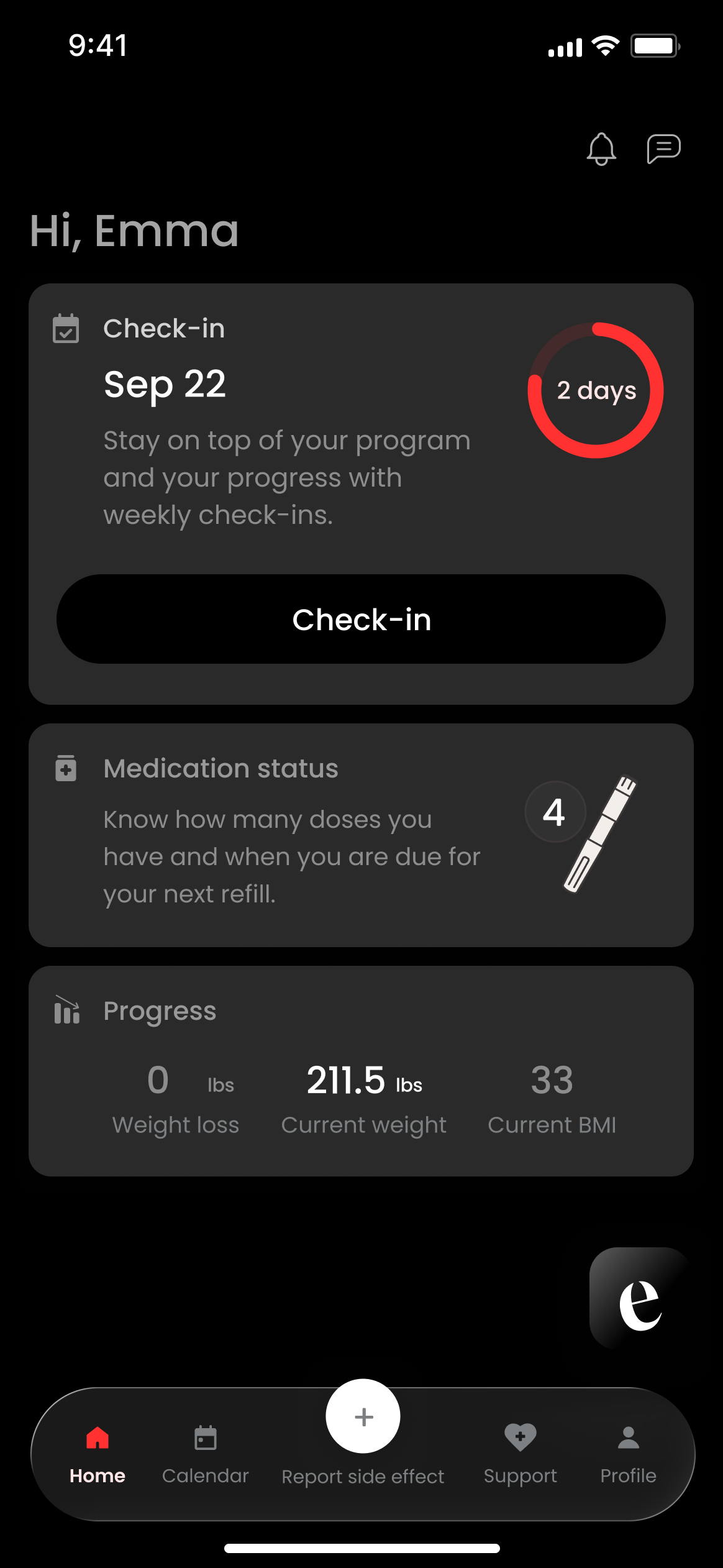
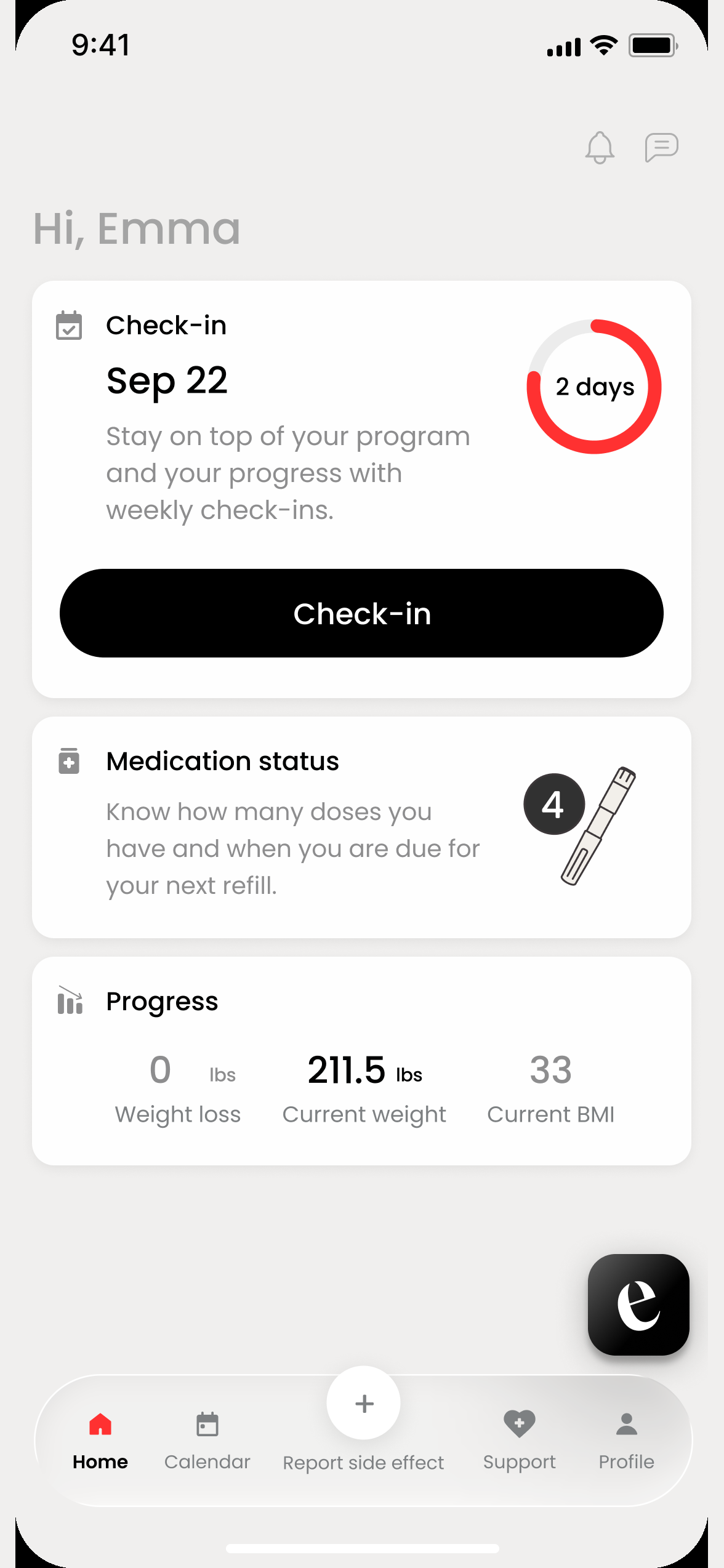
Designed clinical experiences across B2B and D2C channels, including the eMed US member journey (onboarding, clinical, and medication adherence) and a full redesign of the app home, navigation, and key screens.
02
Designed Em, an AI health companion: LLM-guided onboarding, conversational support, and weekly AI recaps.
03
Wrote job descriptions and led hiring for three designer roles.
04
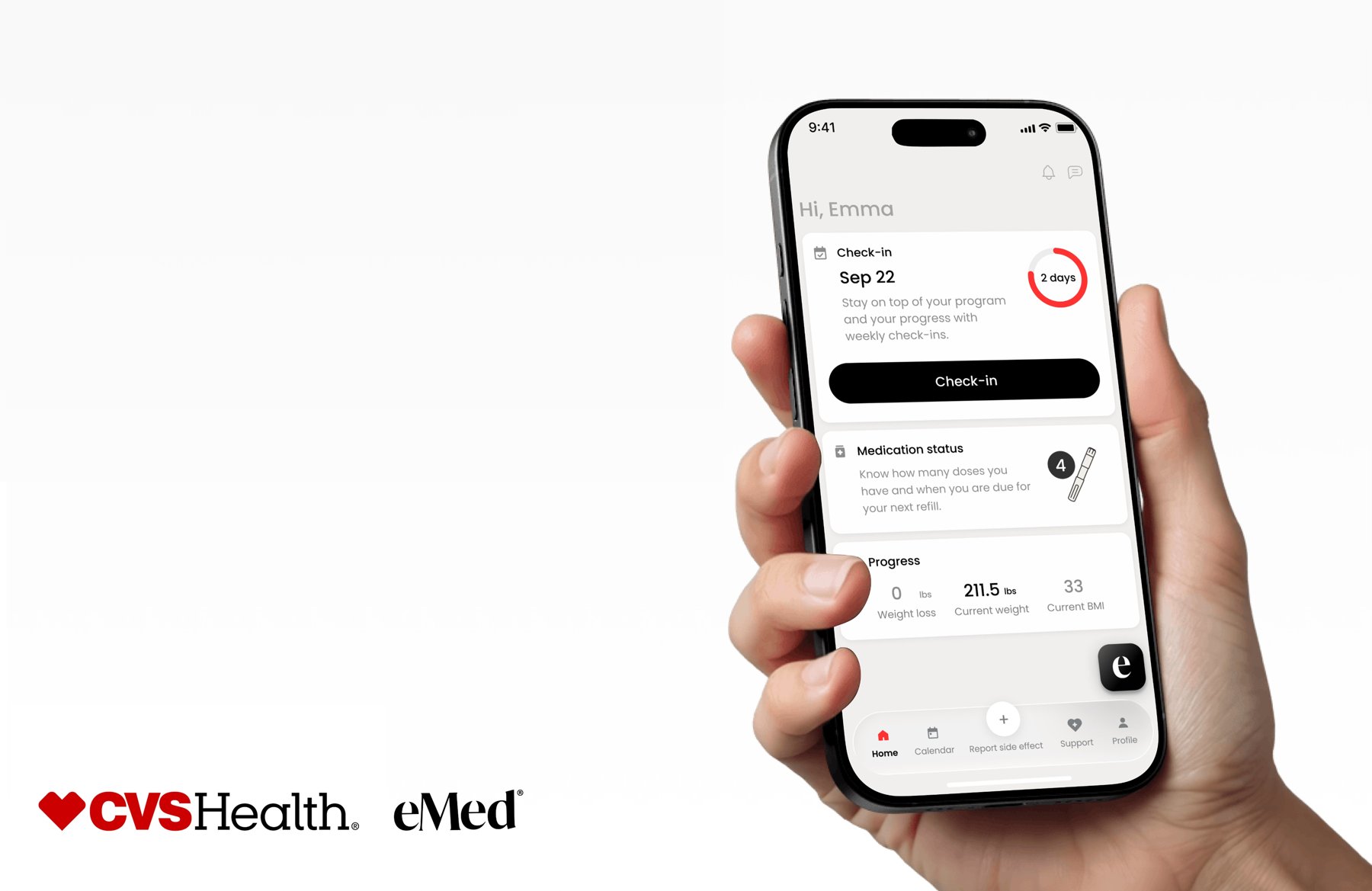
Designed the partnership pitch for CVS Caremark. The partnership was announced in February 2026.
Impact
During my eight months, the eMed US brand launched nationwide, and Aon made a strategic investment in the platform (August 2025). I designed the partnership pitch for CVS Caremark; the partnership was announced in February 2026, putting the program in front of a pharmacy benefits manager serving up to 30 million people. In March 2026, eMed raised $200M at a valuation above $2 billion.
1,200+
members enrolled in the first six months, Aon program
97%
weekly check-in adherence
95%
member retention, Aon program
22.4 lbs
average weight loss, Aon program
30M
people served by CVS Caremark, partner since Feb 2026
$200M
raised at a $2B+ valuation, March 2026
Program results as reported by Aon and eMed; funding reported by Axios; partnership covered by Becker's. Some of these outcomes landed after my time. The product they landed on is the one we shipped.
The challenge
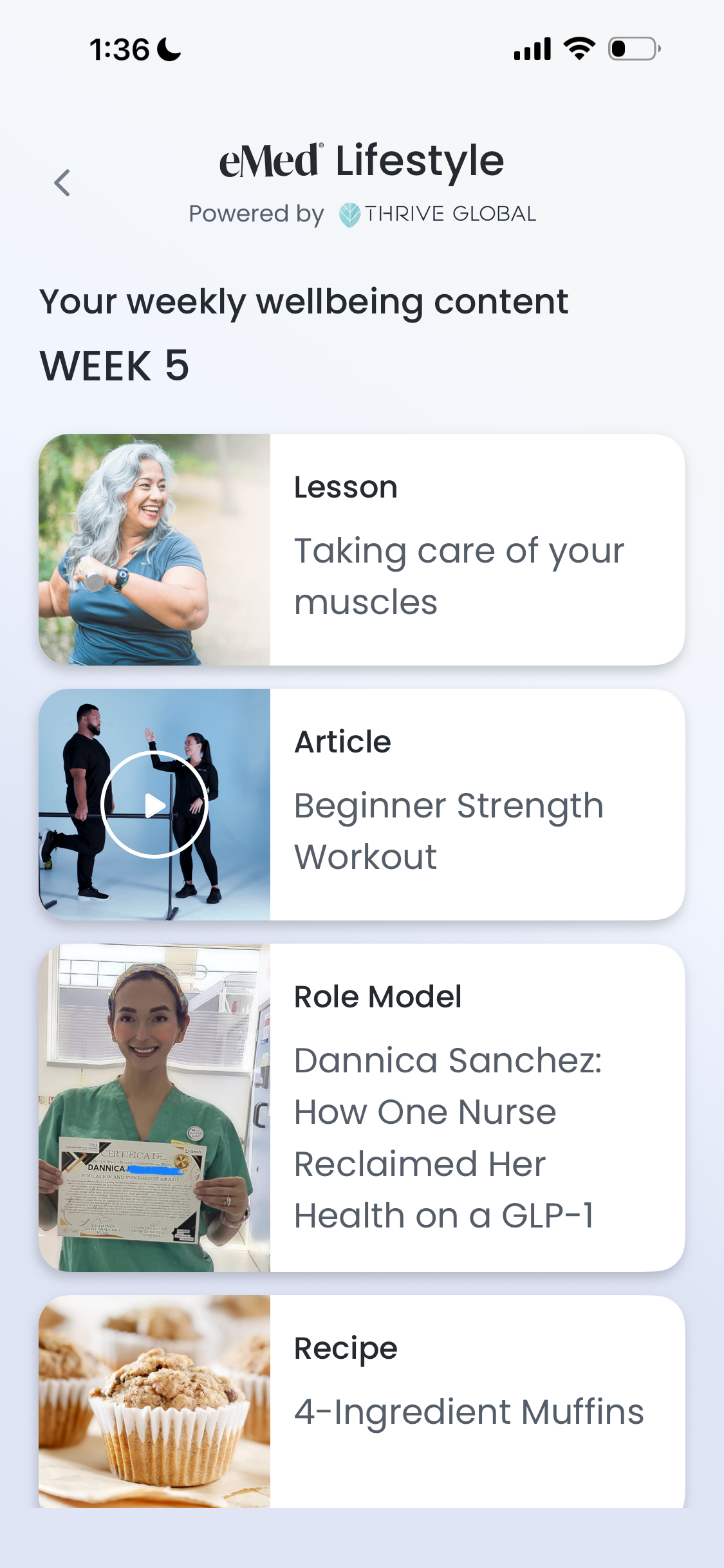
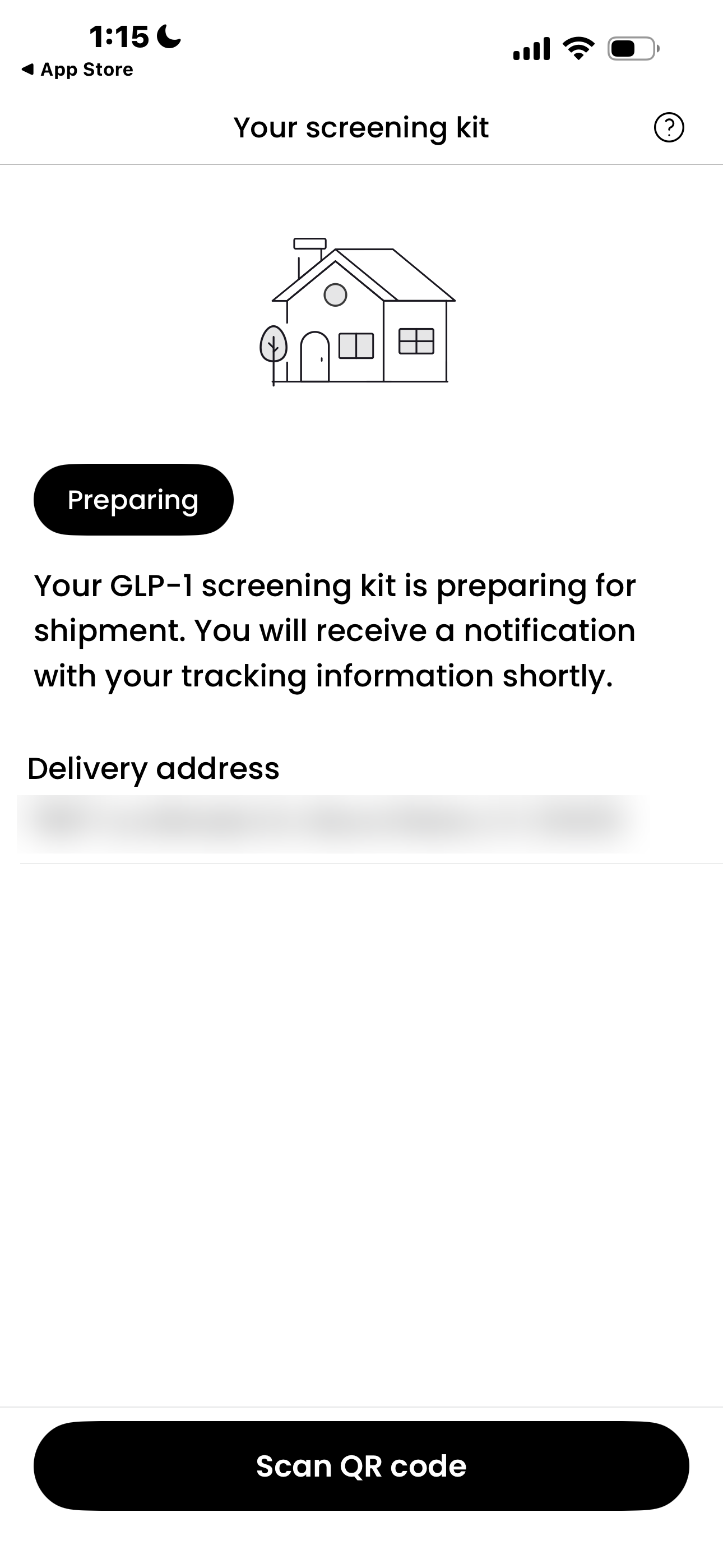
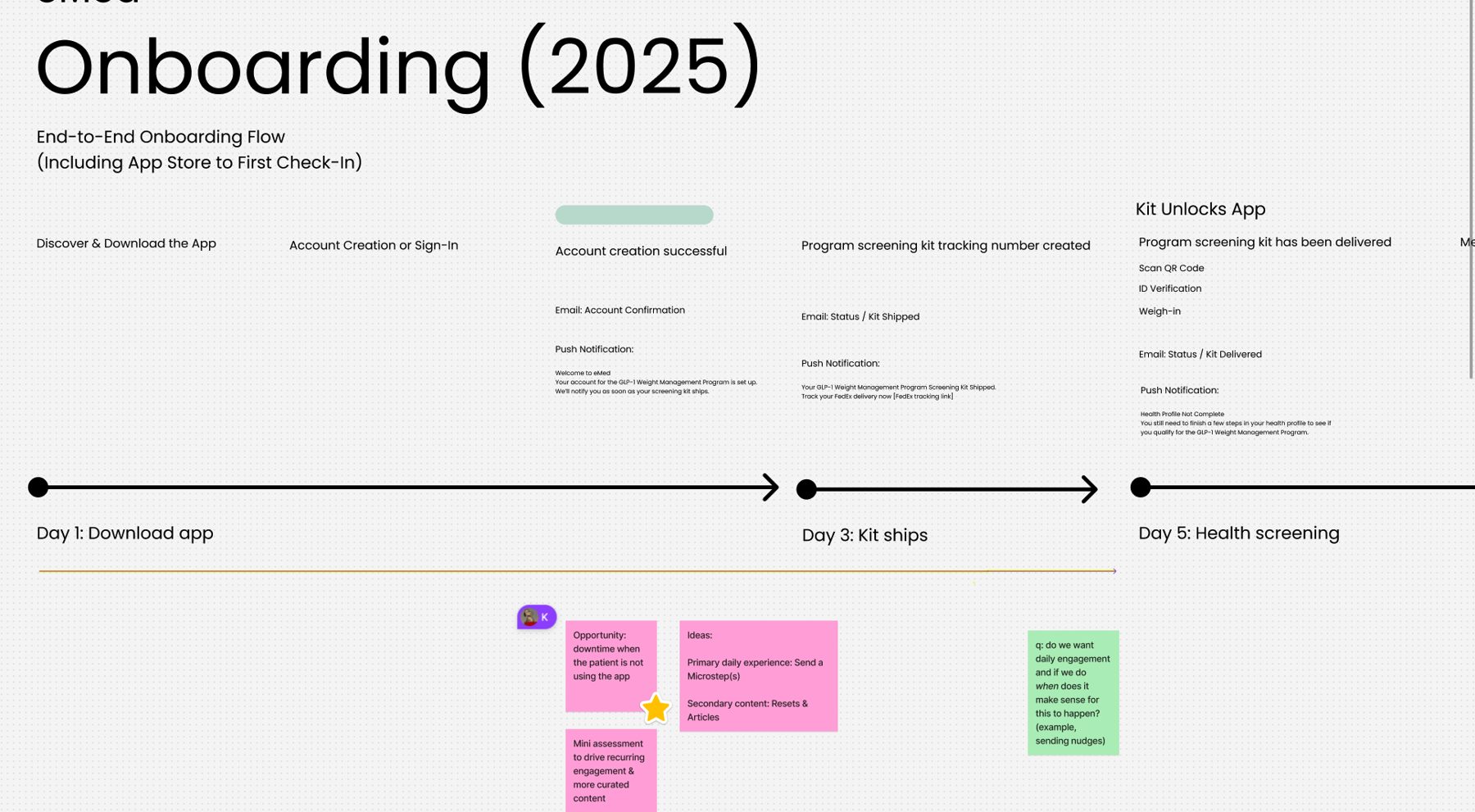
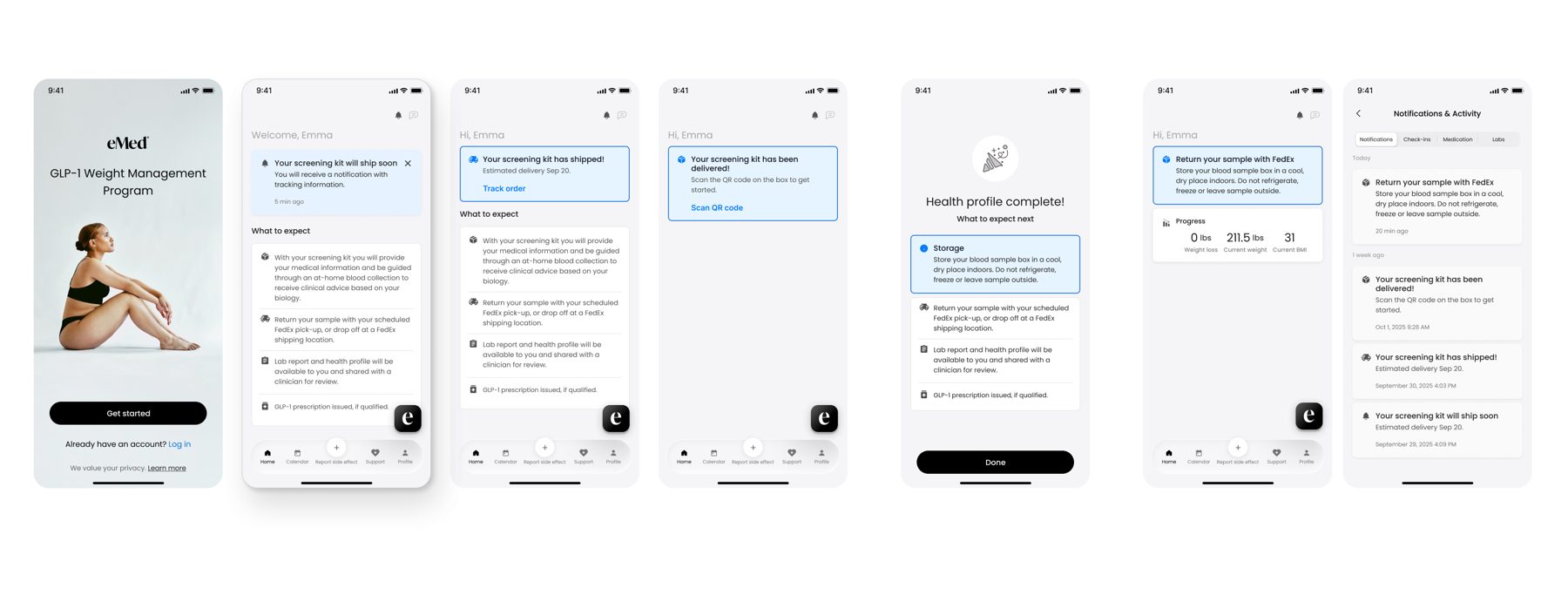
The hardest part of the journey was waiting for the at-home blood screening kit to arrive. People are at their most motivated and most anxious in that window. I designed the app to fill that gap: order tracking, health profile setup, and education that made the wait feel like progress.
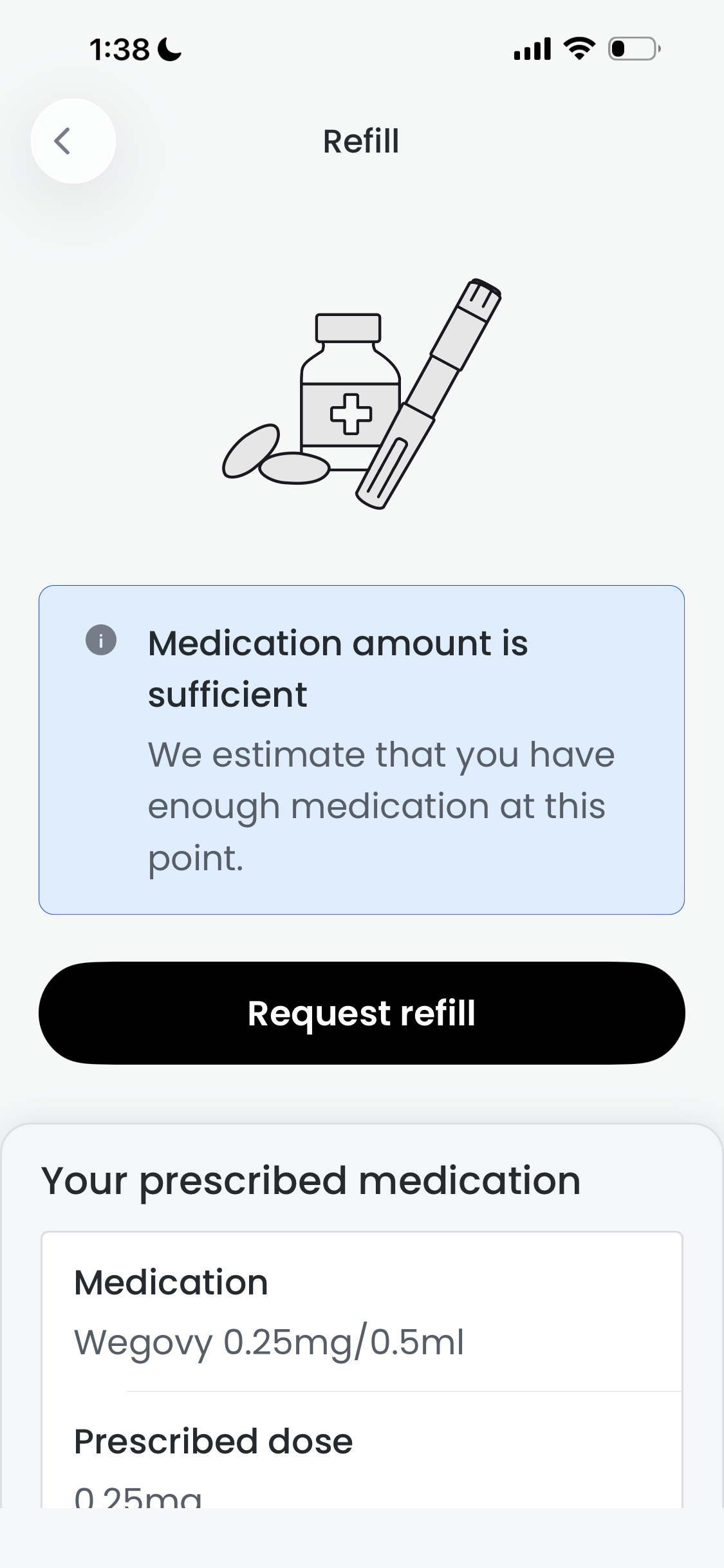
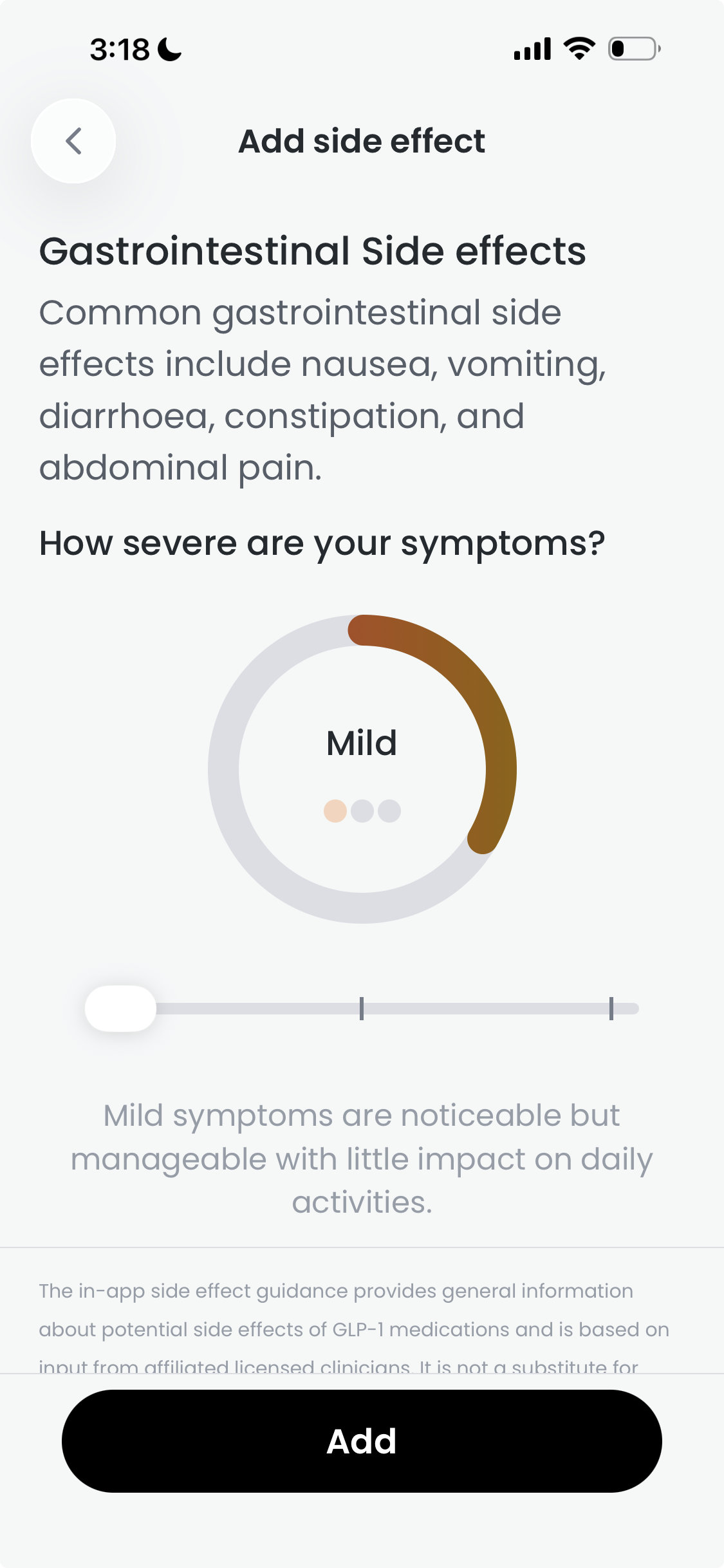
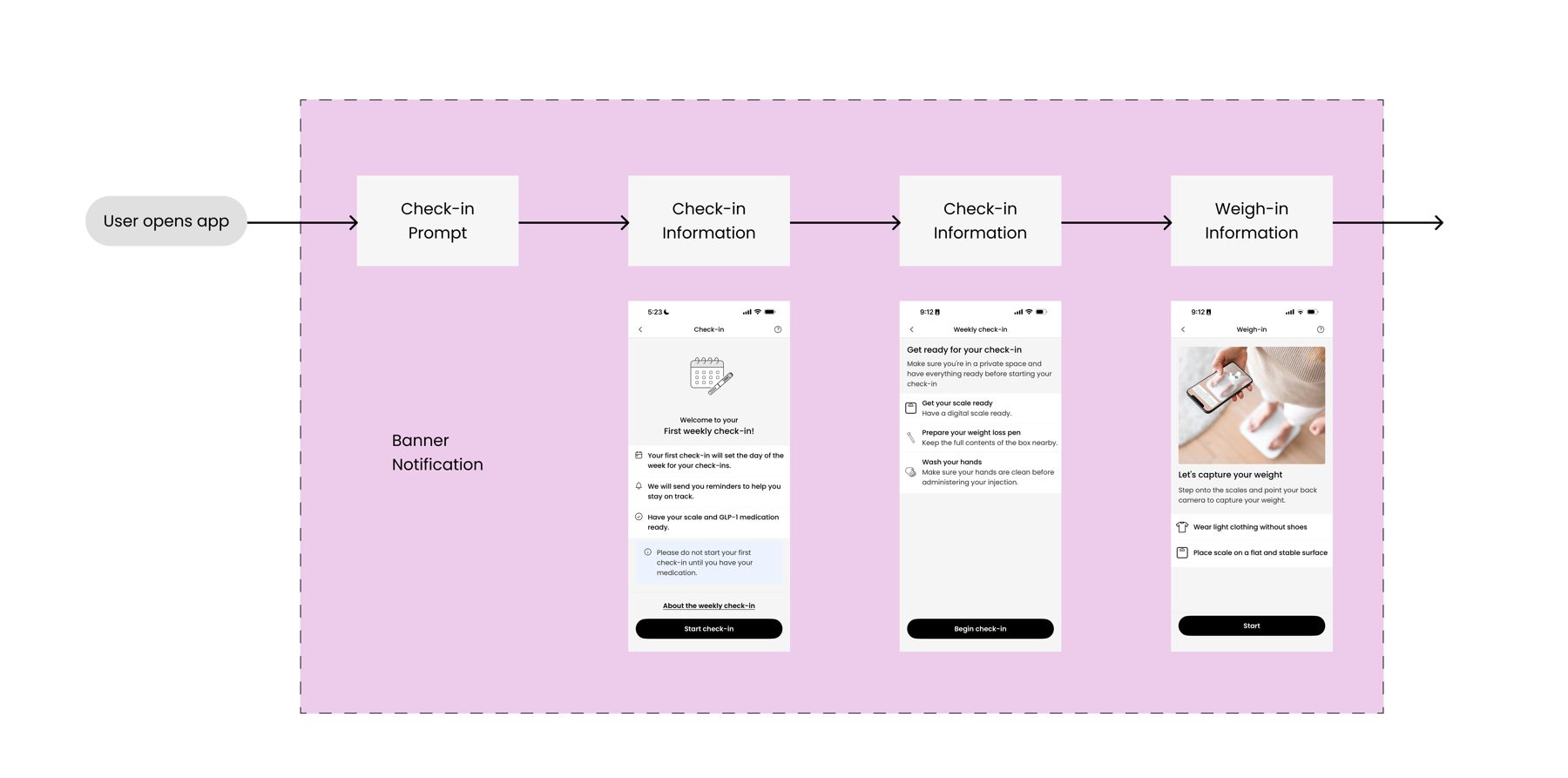
I also designed the UX for medication adherence. In the Aon program, members checked in each week when they took their GLP-1 dose. That let us measure progress and made side-effect support more effective as each check-in prompted members to log their symptoms.
Decision 01 · Consent
Consent captured early
Decided to collect contact details first, so an interrupted member could pick up where they left off, then handle consent in one plain-language step early in the experience when people are at their most motivated.
While users waited for their test kits to arrive, they were asked for informed consent for virtual care, HIPAA authorization, and biometric data policy as part of their health profile setup.
One member journey across B2B2C and D2C
B2B and D2C looked like one product but ran on different rails. B2B members arrived through their employer, with eMed as a benefit and no checkout at all. D2C members went through checkout with medication selection and membership pricing. Behind the scenes, each channel ran on a different clinician group providing the licensed clinicians, telehealth infrastructure, and regulatory compliance.
My job was to make one coherent member journey across two operationally different backends, including the consent layer: informed consent for virtual care, HIPAA authorization, biometric data policy. Every one of those touchpoints had to hold up to compliance review and still feel like part of the product.
Key work: Em, the AI health companion
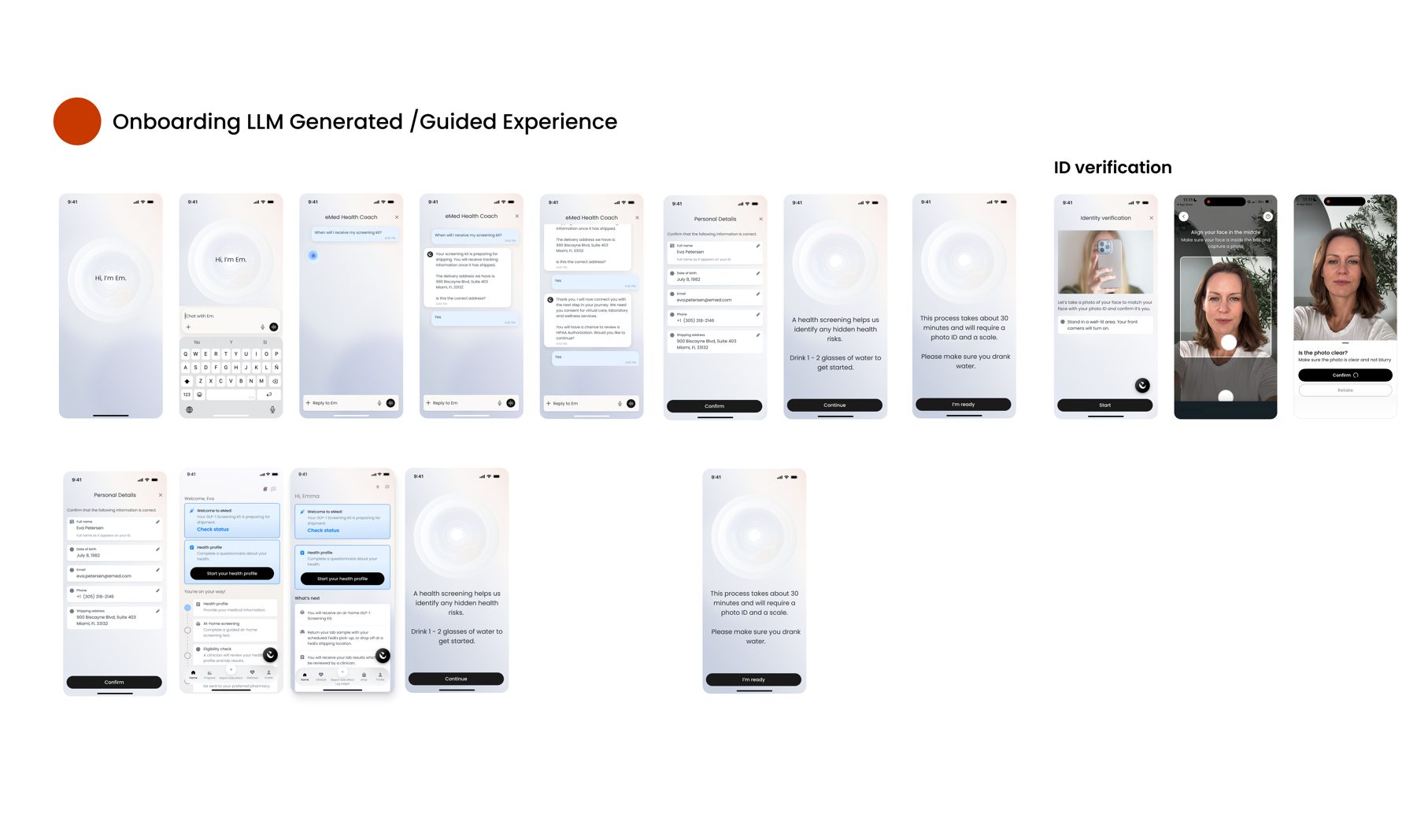
Onboarding is LLM-generated and guided: instead of marching members through static forms, Em walks each person through account creation, health profile, and ID verification in conversation, adapting to their answers as it goes. I designed the companion experience end to end: the conversation patterns, the guardrails, and the handoffs between Em and the clinical team.
Decision 02 · Em's boundary
Where Em stops
Em could help you stay on track, answer program questions, and walk you through the screening kit, but eligibility, dosage, and clinical judgment stayed with the clinicians.
This meant identifying all areas that needed input from clinicians, third-party services, and escalation paths. This incurred operational costs, yet a cheaper solution would have been a noncompliant one.
Women's health: SheMed
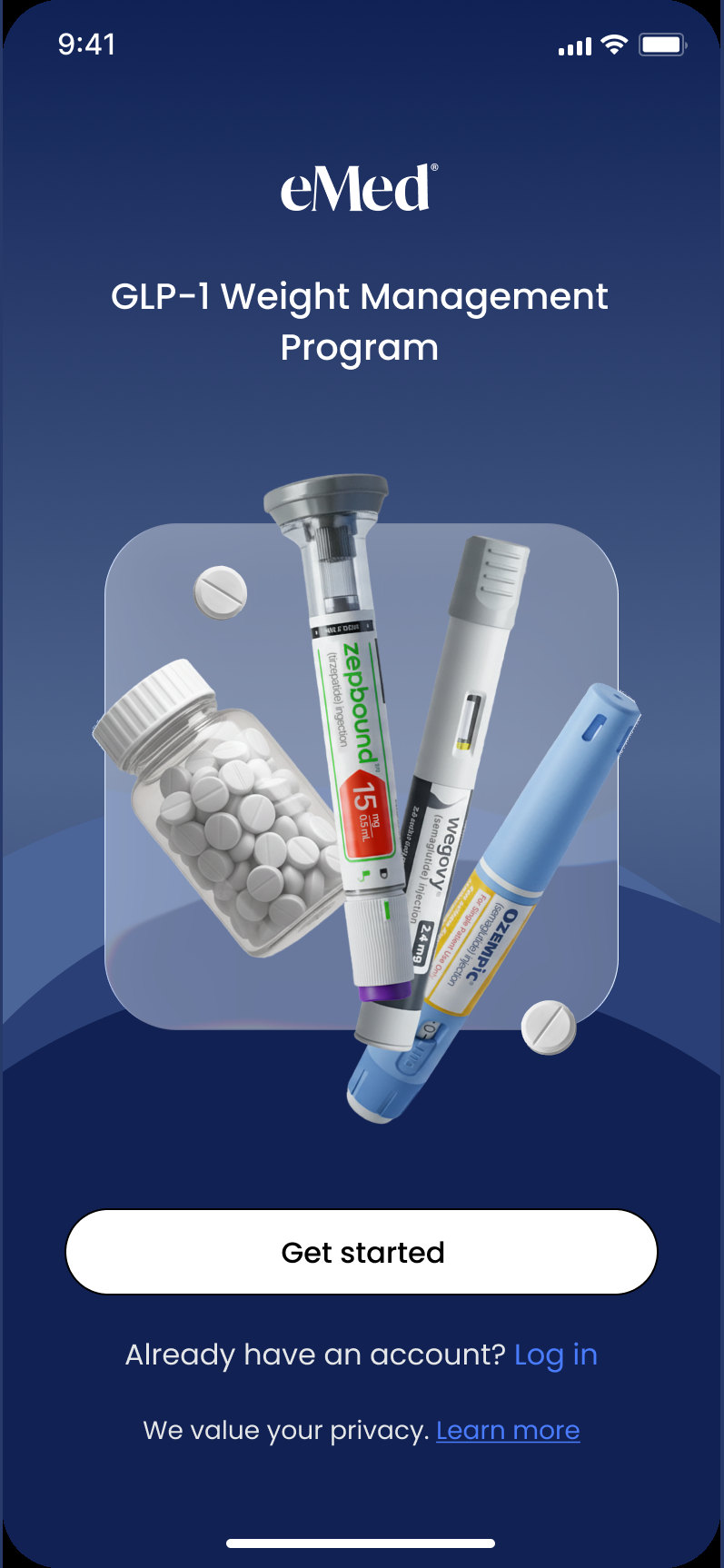
I led design for the US launch of SheMed — a women's-health brand popular in the UK. With eMed as its US clinical partner, SheMed brings the same program to women: FDA-approved GLP-1 medication, eligibility gated by an included blood test, and side-effect management with ongoing clinical support.
I designed the SheMed US member experience: the women's-health brand expression, the blood-test-gated onboarding and eligibility flow, and the ongoing-support surfaces where members log their weight, work through side-effect support, track milestones, and message the clinical team. I also designed and built the SheMed US marketing site, implementing it end to end in Webflow.
In October 2025 SheMed reached unicorn status with a $50M Series A at roughly a $1B valuation, and has since grown past 100,000 members.
Funding reported by MobiHealthNews and Yahoo Finance; membership per SheMed.
Hard decisions
Two calls shaped this product. I’ve pinned them to the screens where they show up — the numbered markers connect each decision to the work it lives in.
Foundations
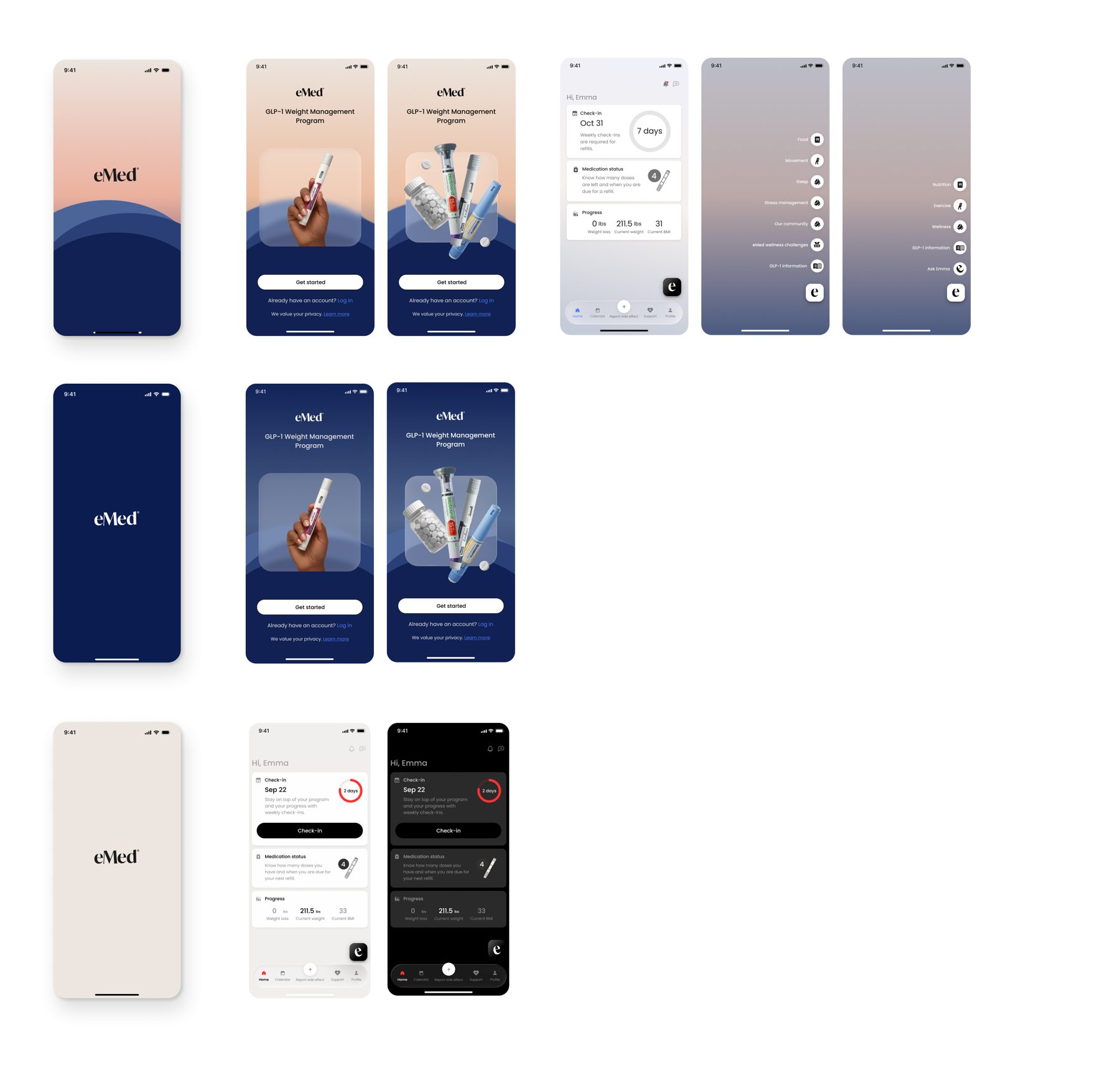
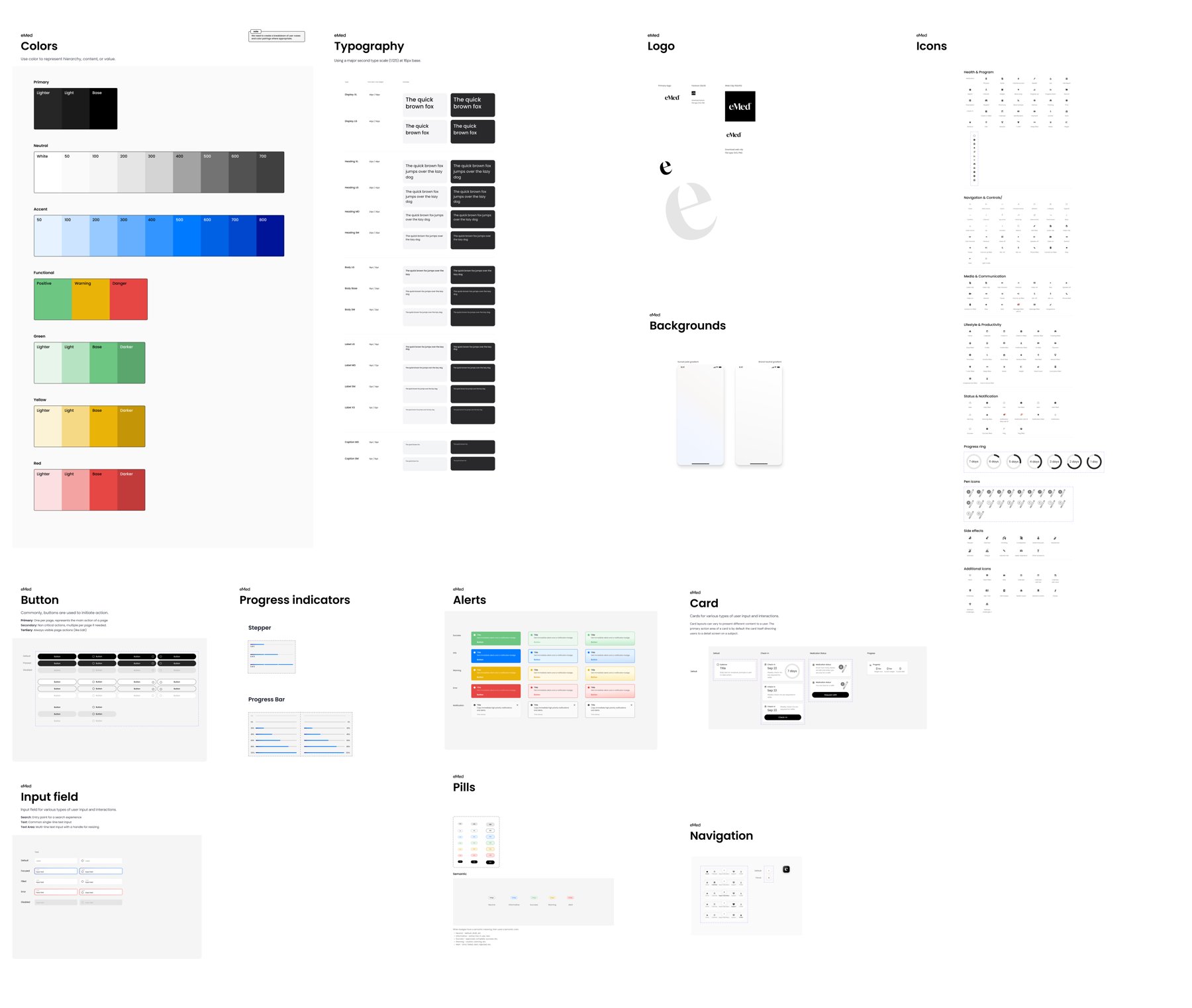
Underneath the program surfaces sat foundations I built, including a new color story and brand expression, and a design system that let a small team ship fast without drifting.
What I learned
Healthtech D2C is the hardest place to do brand work because the stakes are real. Someone is making a decision about their body based on what you designed. That sharpens everything: copy, hierarchy, what gets surfaced and when.
I also learned that in clinical products, engagement design has to earn its keep clinically. Every loop, reminder, and recap needed a reason rooted in care outcomes (adherence, safety, informed decisions), not engagement for its own sake. That constraint made the design better.
Hiring while shipping is its own skill. I learned to be selective about what I held vs. delegated, not just for quality, but for what would actually develop the designer I was leading.